
Lately in my feeds are a lot of videos of gay male choirs and it has me reflecting. Being part of a gay men’s choir wasn’t just about singing. It carried more emotional weight than a performance. It was my first venture into coming out that felt like a real a big risk besides the safe space of my Coming Out Group. I hesitated to write this because I know every gay men’s choir is different, and every member’s experience is different. This isn’t an attempt to define what those choirs are like. It’s simply a reflection on what three years in one choir taught me about community, belonging, and myself. I spent 3 years in mine not just singing but attempting to connect. I experienced a journey that at times was awesome and at others was horrific. It’s not all glitter, dancing queens and dancing beers but there are important memories and connections that I will never forget. Overall, while I would trade some of the people out, I wouldn’t trade that experience for the world.
What I Enjoyed Most
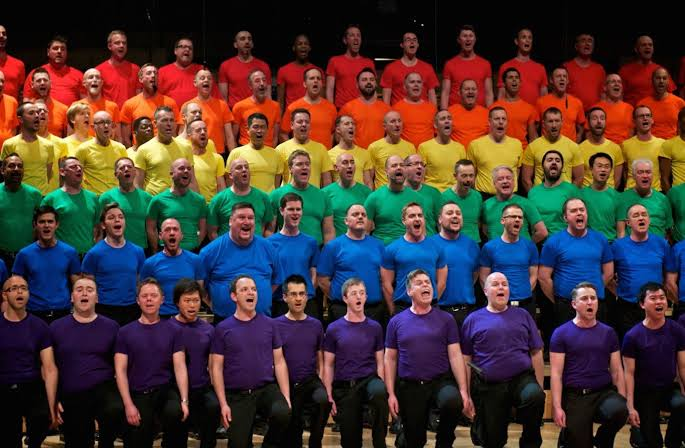
When you see a picture of men singing in a gay choir, you may get the idea of a group of guys really enjoying themselves and all that comes with that. Most of that is true!
By the time we perform we know our music inside and out. We can sing it in our sleep. We’ve met in small groups of sections whether it be bass, tenors or baritones many times over and this has given us a great sense of being on a team that comes back to sing as a unified whole. Now, understand, for many of us, being part of a team of guys is not a regular occurrence for us, if at all. This in itself is a vibe, a very joyful vibe, of competence and connection.
The next wonderful thing is knowing we are making a crowd of people happy evidenced by the audience response. As a gay person, often in our lives, we have crowds of people bully us and the whole of society dictate our future. Here, in this performance venue, it is just us bringing the joy of music and the response is happiness with people swaying to music or clapping in response. That too is a beyond the stratosphere experience for those of us who have experienced years of societal and peer rejection. We went from “Boo!” to “Yay!”

If you are fortunate enough to have a good choir director and section leaders, you find yourself mentored by leaders, perhaps, for the first time in your life. There is this sense of someone seeing you as a group of special people. With our choir, we were the first of its kind in the community so it felt really special. Our director was really in tune with the value of that early on and it was emotional for us. He wasn’t perfect. There were serious issues, but he was in tune with this and it made it very special in those early years that I wouldn’t trade for anything. No matter how the new version of the choir grows, there is nothing that can take away from those early years and how special they were.
There are also ways in which choirs take on community ventures so we aren’t just thinking of the life of the choir, but also giving back to the community. This gives a sense of a greater purpose that most choir members get behind.
Last but not least, there are the connections you “can” make. This is tougher because everyone comes to choir with different intents and purposes. I remember when I first came to my audition, I was surrounded by guys who supported me through that process. However, on my first singing night a man told me to go sit somewhere else. Others I heard had an intent to come sing and not make connections while still others wanted more. My experience was complicated and I enjoyed the connections while I had them there. Looking back though, I realized that very few of those relationships survived once choir wasn’t bringing us together
The Challenges Behind the Curtain
If I would say there were any bad things, probably the most annoying of all of them in the gay performance arena were the divas getting their unjust due. The most arrogant, loud, obnoxious people, as long as they are talented enough will do the “if you got it, flaunt it” and still often be the star of the shows. Or, they didn’t have to be this either. They could be cleverly, slyly cutting or a director’s favorite. In my experience, there was such a premium placed on talent so they sweep it up no matter the toxicity or how it effected the choir. Meanwhile, the members can often see it as a competition as fierce as Broadway though it is only a community choir–even if it is just a board position. Then cliques form around these people that are then hard to penetrate.

As choirs seem hyper focused on being the next Off Broadway Musical than just a singing choir, and as they grow in size along side this, you can end up feeling like just a less talented number in a crowd questioning your value in being there as just another voice.
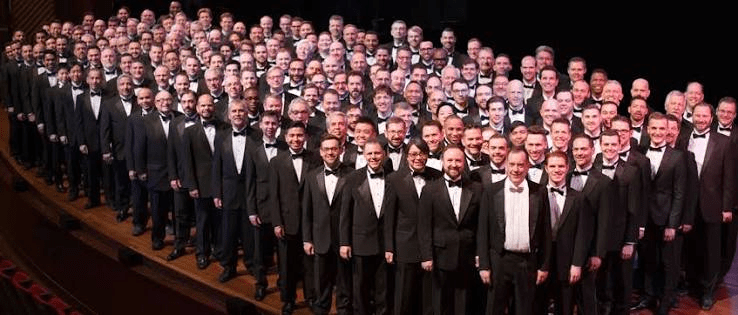
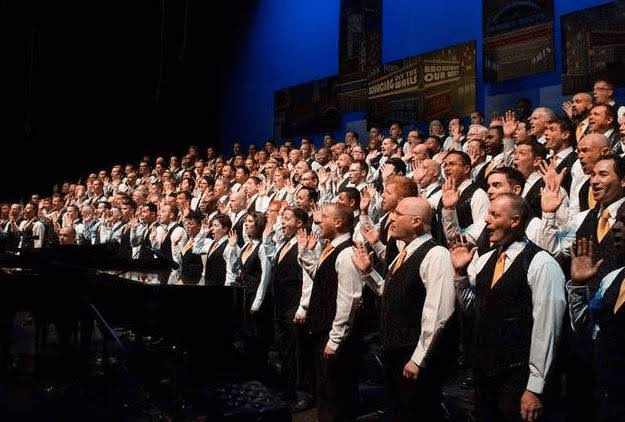
It’s difficult when you are just “okay” looking and “okay” talented to be a part of something where a new form of bully gets to win every time–that is the talented diva. I remember that my section leader was like this but was a personal friend to leadership so nothing ever got done about his toxic treatment of me and the friendship was the excuse I was given. Same happened in Gay Sports when a false claim was laid against me–it was by a board member who was on my team and my team was all her long time personal friends. What chance did I have? So I just left in both cases in the end (there were more reasons than that though)
You might get the idea that we are all one big happy family when you see stage performances, but think again. At times it felt like a reality T.V. show behind the scenes. My experience is the community where I live that the gay men here are often noncommittal. So many men dived deep into my being one season and the next, it was like I didn’t exist and then they gas lit me when I approached them about it. Choir house parties often involved a lot of drinking and other oddities, if you will. I was called “boring” for not having a drink in my hand constantly by a friend I had given my complete trust to, so as fulfilling as it was to be invited to someone’s home, there was some kind of slight involved against my personality at some point that would end up being cutting. The Gay Cat Claws. Meow.
Let’s Give ‘Em Something To Talk About

There are often secrets no one talks about when it comes to gay choir histories. It gets wiped over. When I came to my choir, I didn’t know for a long time that it had been a splinter group from another choir. From that point on, I would have men in my ear telling me every nightmare scenario about it, which I fed into because it helped me feel like I belonged. And this would build to a point where things went array with this choir too and then they were in my ear about the present director which got me amped up, and then this choir split too!
It was a mess and unless you were considered an important member to the choir, people in the cliques didn’t understand any public outcry about the new fracture that split choir. Who are you to be so invested and make a public outcry? It did matter to me though. It was all I had at that time that once brought me joy. When I left, I was devastated. So were others, some I knew as contacts or friends were depressed or suicidal. I was so saddened that once I drove back to rehearsal but I couldn’t get myself to go in. It was no longer a safe place. I couldn’t trust the leadership, my section leader and the joy to sing with them was gone. I had lost my second home. I would try other choirs later and even return after the split to try their new, larger choir but none of it ever suited me anymore. I didn’t want to be a chess pawn in someone else’s performance venue with no voice. The pain followed me like a wounded dog for quite some time but I moved onto some other ventures regardless. I kept hearing through the grapevine others experiencing the same thing, so I was definitely not alone.
What I Came to Understand
Over time, I began to realize how much of my emotional experience in that space was tied to external validation—audience response, group recognition, and social belonging within the ensemble.
The joy was real, but I came to see how dependent it was on dynamics outside of myself. That was an important realization for me. It was similar to another big break with churches as well. I needed to learn to love myself and go on that journey. It’s not anything anyone teaches you how to do in a good way. Actually society teaches us the exact opposite so we buy their products, depend on their organizations or people can claim power over us for that very reasone–self-hate.
Eventually, I also came to understand that I needed relationships and communities where connection felt more steady and mutual, rather than something that shifted heavily with context or visibility but alongside the very difficult journey of self-love.
This was something that set me free from needing validation from others and even in my jobs.
Where I am Now

I don’t regret my time in my choir. I wouldn’t erase it. It was an important part of my coming out journey and my early experiences of community.
At the same time, I no longer see myself in that same space. I’m focused now on building relationships and communities that feel more grounded and lasting, and on developing a stronger sense of connection that doesn’t depend so heavily on external validation. I seek more one on one relationships that prove the test of time.
I still smile when I see other gay men’s choirs online. Sometimes I even miss it. But I no longer mistake missing a chapter of my life for needing to return to it. What I realize is that I don’t need another set of lights, stages or events with a rooms of people. It’s relationships that still exist after the applause is over.


