Intracommunity Stress and Disengagement
First, I want to clearly state the problem and that it isn’t just me stating this. I’m backing this up with research. Then I will share a little a bit of my own story and where I am at with it.
“Conceptual Framework Minority Stress Theory” traditionally emphasizes external stressors (homophobia, discrimination). It is the one concept that has had the largest megaphone over decades, and rightfully so.
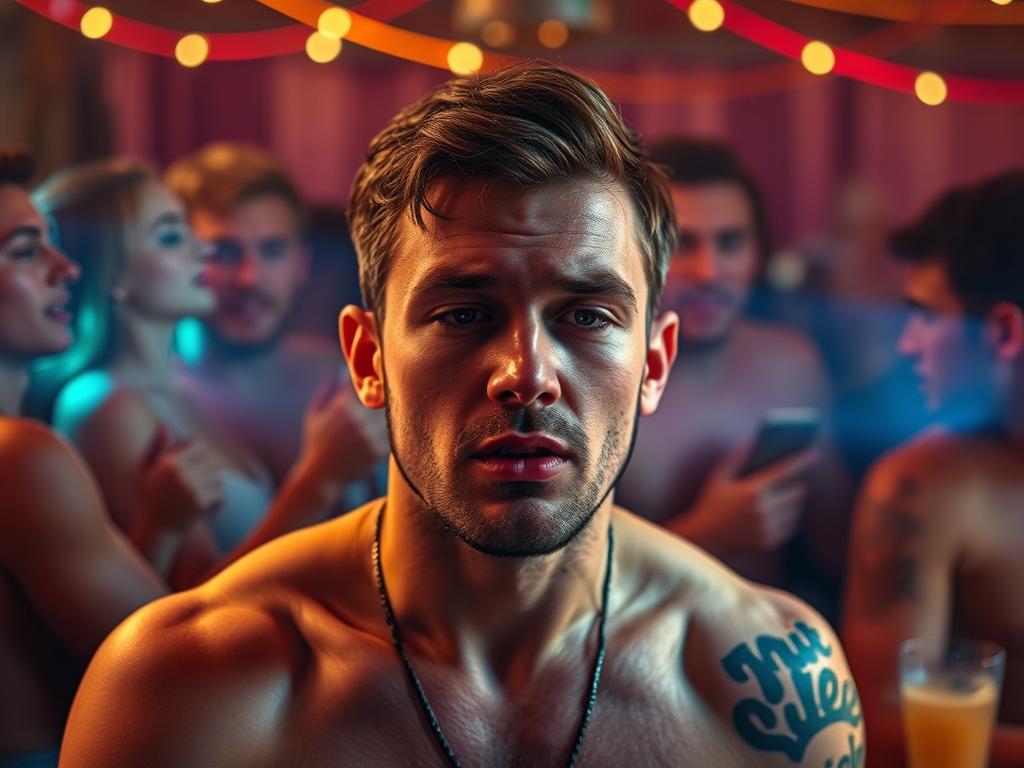
However, with progress in our rights, and the lack of gays taking on responsibility and opportunities to “take the bull by the horns,” so to speak, there is a rise in gays “retiring” from gaydom. It stems from “Intraminority Stress” (aka “gay-community stress”) and this extends to pressures inside LGBTQ+ spaces, such as: – Status obsession (looks, wealth, popularity) – Sexual hierarchies (masc/fem shaming, body type preference, HIV stigma) – Racism & exclusion (especially on dating apps) – Ageism & invisibility(older LGBTQ+ people sidelined) – Cliquishness and conformity pressures. These factors contribute to alienation and, for some, withdrawal from active participation in queer spaces (Pachankis et al., 2015). This research I found is from 2015 and still hasn’t changed today. I still hear the same old swan song today from gays and it is so egregious!
Let’s dig deeper into these findings:
- Gay-Community Stress & Mental Health: Research shows gay-community stress is independently linked to depression, anxiety, and body dissatisfaction beyond external homophobia (Pachankis et al.,2015–2020).
- – Body Image & Disordered Eating: Community pressure correlates with heightened body
dissatisfaction and eating disorders (Pachankis, 2018; see also recent reviews). - – Sexual Racism & Exclusion: Research on apps documents “no fats, no fems, no Asians” patterns, reinforcing racialized hierarchies and exclusion (Callander et al., 2016).
- – Ageism: Youth-centric culture leaves older members feeling invisible and disengaged (Fredriksen-Goldsen & Muraco, 2010).
Sometime around 2023-2024, the Surgeon General of the United States warned that our nation’s number one mental health problem was loneliness and the culture leading the charge was gay men.
Cultural Critiques & Narratives
- A study on Pub Med explores how this plays out in gay Taiwanese men, triggering an increase in loneliness, depression and suicide attempts. https://pubmed.ncbi.nlm.nih.gov/40522640/
- Another Pub Med study explores the associations among intraminority gay community stress, body image, and community connectedness in relation to disordered eating behaviors among sexual minority men https://pubmed.ncbi.nlm.nih.gov/40462150
Reported Reasons for Gays Retiring or Stepping Back
- Commonly reported reasons include: – Exhaustion with judgment (looks, status, race, body)-
- Desire for authenticity beyond apps, bars, and hookup culture
- Disillusionment with shallow or exclusionary dynamics
- Age or life stage changes (older LGBTQ+ people feeling invisible)
- Mental health preservation (reducing stress exposure)
What These Gays Are Doing For Alternatives & To Cope
- Building sub-communities (sports leagues, creative collectives, queer elder spaces)
- Choosing “opt-in” queer culture (smaller circles, sober spaces, intersectional groups)
- Digital detox (reducing reliance on apps like Grindr)
- Intergenerational connections (mentoring, mixed-age groups)
- Critical reframing: redefining “community” as self-curation, not withdrawal from queerness. Reintroducing straight counterparts who are gay friendly.
There is no exhaustive research or quantitative data on LGBTQ exit rates from queer spaces due to frustration. Most studies look at external discrimination over internal dynamics. However, there is still a strong body of evidence out there in essays, ethnographies, and psychological research like the two I presented here that describes intracommunity stress as a driver of alienation and withdrawal. It is real if not even under-measured. Frustration with shallowness, judgment, and exclusion leads many to step back, curate smaller circles, or redefine what “community” means. I know I am one of them and I am hearing of an increasing number of others.
My Experience & Where I Am At Now
I have decided I will write a book about my own experiences. It will be fiction, but based on my true life stories. I think it will make for a funny, emotional, and sad tale that hopefully inspires change. Here is a rough shot of my experience and where I am now in the meantime:
I came out timidly in my late 30s after years in ex-gay ministry and reparative therapy. Needless to say, accepting myself as gay and being comfortable around other gays wasn’t a one-and-done deal. It was a process. Going to a gay ‘Coming Out Group’ and being invited to a gay book store decorated with dildos and vagina sex toys on the wall by a man with metal teeth was not exactly the “first” experience I was hoping for. Especially since he phoned stalked me for several days after. Nevertheless, I kept at it. Kept putting my quivery self out there.
It took some time, but I got established in that Coming Out Group and branched out to a Gay Church. The real stretch was later leaving that homebase group for a gay choir because they were both on the same night, and I knew in my gut that I would lose the connection with the Coming Out Group over time. My 1st experience at gay choir was going to sit next to a man who instead directed me to go sit somewhere else. That should have been the sign. However, I made what I would call some very entertaining, charming friends. They invited me to their “house” parties, the music we sang was great, the experience changed me early on and I stayed for about 3 seasons. I stuck with that until the gay drama unfolded. I found myself more and more unwelcome, and the entire choir itself split off into 2 separate choirs because of differences. What once was a solace of music and hope came crashing down with a whole lot of people with it.
And my gut was right, the Coming Out Group wasn’t the same. There was a new clique in there, and my welcome had grown very cold. People who were once kind trusted companions now looked through me as though I wasn’t there. New, younger gays wouldn’t even acknowledge my presence. Our gay church also had moved to a new location, so we started going to one closer to us, which oddly enough got me mean comments by some of those gay church members on my social media, and huffs and snorts when my mom and I visited.
For a while, I formed my own gay men’s group during COVID, which was small and went alright till it didn’t. That lasted for about 2 or so years and then just fizzled out.
So, I went the gay sports route, where I got bullied on the field and ultimately back stabbed by a board member in a very public way. I was asked to defend myself and I just didn’t want the drama, so I left. I was done because also during that time, 3 of my gay close friends just ditched me. One was a friend with who I had a disagreement with and he exaggerated it to the point of using it as a weapon and ending our friendship. Two others ended their relationship with me because, well, I just missed the signs behind their charm that they weren’t good people, and when I saw through it, it was over. That was both good and difficult to this day.
Most of the people I had known since I came out, not all, were very kind, charming, entertaining people who would turn their back on you for not much reason in the end. That is what I learned. Going to clubs, the resorts, sifting through the apps–it’s alluring, full of a certain promise. Yet, after a while, I saw these paths not leading anywhere but to continued heartbreak. I will never forget overhearing a man whose home I was consistently invited to over the years, both for house parties and one-on-ones, at one point tell his guests that he only invited me because he knew I would take photos and put them on social media. I was out of the room, but I could hear him. He treated everyone like they were the apple of his eye, but in reality? In reality, he probably couldn’t care less unless it benefited him. And that’s a hard lesson to learn after you invested so many years.
This is my experience with my fellow gays in my community by and large–not exclusively. There were small bright spots but few. And you would think by social media, these gays are the happiest people in the world, but they often aren’t. They are some of the loneliest people trying to fill a void and hoping your social media approval and applause when they brag or boast will be a balm for some of that.
Presently, I don’t consider myself “retired” as I do “critical reframing” and maybe doing some “choice opt-ins”. I’m really excited about the reframing because there are people who love and care about me. There are things and people I can do things with, and it doesn’t have to be in queer spaces to be safe. God knows, I wasn’t safe in those queer spaces! I had hoped I was, but as grandma used to say “Just because a car is parked in a building, that doesn’t make that building automatically a garage”. In kind, just because something or someone carries the banner of gay or queer, doesn’t make it accepting or safe for you. The gay community suffers from a lack of role modeling and a certain element that refuses to grow into maturity and take the healing opportunities afforded to them. Until that gets resolved, it will largely be a free-for-all group of people who really don’t know how to connect on a significant level because they were never mentored and now don’t care to learn.

 Jamison's Writing Jams