
When Pride Becomes Performance and Connection Gets Lost in the Noise
America Divided—Even Within Ourselves
It’s not just left vs. right, red vs. blue, MAGA vs. liberal. Our cultural divide runs deeper than politics. It’s in how we relate to one another. How we define identity. Let’s face it. Right now, the divisions are manufactured and at their worst by power plays. Yet all of us are have deeper desires for connection than ever before. We chase love, validation, and connection in a world obsessed with appearance and performance, and are left largely empty-handed.
We love to spot the dysfunction in them—the other side, the other culture, the other community. But what happens when the mirror reflects our own party? Our own house? What happens when the critique we fling at straight bro culture circles right back to us?

The Frat Boy Vibe—And Why We Think We’re Different
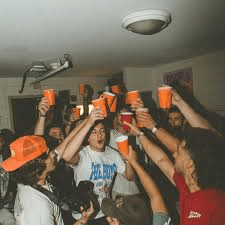
Frat bros have long been cultural punching bags. From Hollywood tropes to social media satire, they often represent a cocktail of hypermasculinity, immaturity, detachment, and privilege. Parties every weekend. Status is measured by hookups. Emotions mocked or buried. A social currency built around looks, power, and who knows whom. Even so, a lot of gay men get off on websites like FratnerityX or stream shows like Elite. There is an inherent worship behind the mask we carry of the very hypermasculinity, immaturity, detachment, and privilege that elude us, suppress us, and are toxic in this stereotypical imaginary frat boy party culture we hold up as a titillating fantasy. We often want to recreate some measure of it with our own posse in a desperate attempt to make a counter version that still holds values which are just as toxic.
In the gay community, we still say, out of the other side of our mouth, we’re different, we’re more expressive, creative, and emotionally aware than them.
But are we?
A Familiar Mirror: Our Own Glitter-Coated Frat Culture
Let’s be honest.
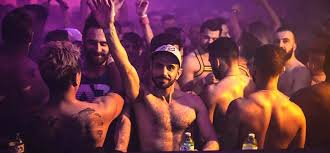
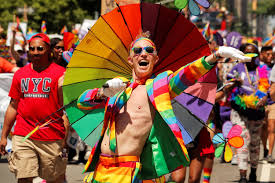
Look at many gay party scenes. The high-energy club nights, circuit parties, destination weekends. The glitter, the abs, the followers. The obsession with being seen — not just seen, but approved of. The social hierarchies built on beauty, body type, and connections. The way sex becomes transactional. The way friendship sometimes feels more like networking.
We’ve replaced beer pong with fireball shots and rooftop selfies. The jerseys are mesh now, the letters swapped for slogans. But the emotional detachment? The fear of being vulnerable? The pressure to perform, to win attention, to be the hottest guy in the room?
It’s all still there. Just…fabulously rebranded.
The Roots: Suppression, Survival, and Celebration
There’s a reason for this, and it’s worth honoring. Queer culture didn’t evolve in a vacuum. For decades, we were hidden. Demonized. Criminalized. Told to hate ourselves and bury our desires.
So when closets opened and visibility surged, the celebration was (and still is) necessary. We deserve joy. We deserve pride. We deserve to be loud. The older you are, the stronger, faster, and harder you burst out of that closet and onto the scene, making it more vulnerable for yourself. Your emotions are raw, and you need role models.
We often say we are living out our teen years as adults, from the suppression that has taken place over many years. That makes sense and is true in ways; however, how many teens do set themselves on a straight path to consistent anonymous sex, drug, and alcohol abuse, and is that the model we wanted for them? For ourselves? Most teens don’t go down the path of the Fast and Furious and have sex with a lot of their peers or strangers. I propose that though sexual experimenting and expression is normal, the amount of the fast and furious paths many go down with this reasoning is an excuse that isn’t based in reality. If that is your choice, that is your choice, but is that something we should hold up as a norm for our community past experimental phases?
I remember being in a chat group for an event recently. The word to the newcomer was that you would know you had a good time if you walked away with an STD. That was tongue in cheek, but STDs are seen as variable misnomers anymore. It is expected that you have one if you are worth salt, and that is pretty sad.
I make this point because when our only mode of freedom becomes partying, sexual performance, or image curation — we risk becoming emotionally starved. We stay locked in the same cycle we once fought to escape: conditional love based on what we can offer or perform, not who we are at our core. Who we really are at our core never becomes realized beyond an “out gay man” and at times, if it is seen, it is shamed and repressed back down for not fitting in with the status quo.
The Cost: Connection Without Depth

Many of us are exhausted — and not from the dancing. From the disconnection.
We use the word friend loosely. We flirt in DMs and ghost without explanation. We crave love but settle for clout. And when someone doesn’t invite us into the group selfie or the next party, we feel the sting. We call it fun, but a lot of it feels like silent competition.
In trying to stay visible, we’ve lost intimacy. In trying to stay on trend, we’ve forgotten how to be real. In chasing likes, we’ve buried longing. In some ways, the frat boy and the gay party boy both wear masks — one shouts no homo and the other screams look at me, but neither says what they really mean: I’m scared, I’m lonely, I want something real.
So What Now? The Dance Floor or the Table–A New Kind of Pride.
This isn’t a call to shut down the parties. It’s not an anti-pride rant. Expression, sexuality, and celebration are beautiful. We need safe spaces. We need release. We need fun. But we also need space for truth. For depth. For connection that doesn’t require glitter or abs or a stage.
We need to talk to each other. To sit at tables, not just dance floors. To ask each other questions that don’t have a punchline. To tell the truth about what we want, what we’ve lost, and what we’re still hungry for.
A New Kind of Pride
Real pride isn’t just about being seen. It’s about being known. It’s about showing up when the lights go down, when the costumes are off, when the music stops. It’s about building something more than one-night intimacy or event-based friendships.
And maybe, just maybe, it starts when we stop pretending we’re so different from those we mock or look down on — and start healing the parts of ourselves that still feel unseen.

 Jamison's Writing Jams