
One of my favorite Christmas songs among a few is “Do You Hear What I Hear?”
Said the night wind to the little lamb,
Do you see what I see
Way up in the sky, little lamb,
Do you see what I see
A star, a star, dancing in the night
With a tail as big as a kite
With a tail as big as a kite
Said the little lamb to the shepherd boy,
Do you hear what I hear
Ringing through the sky, shepherd boy,
Do you hear what I hear
A song, a song, high above the trees
With a voice as big as the sea
With a voice as big as the sea
Said the shepherd boy to the mighty king,
Do you know what I know
In your palace warm, mighty king,
Do you know what I know
A Child, a Child shivers in the cold
Let us bring Him silver and gold
Let us bring Him silver and gold
Said the king to the people everywhere,
Listen to what I say
Pray for peace, people everywhere!
Listen to what I say
The Child, the Child, sleeping in the night
He will bring us goodness and light
He will bring us goodness and light
source: https://www.lyricsondemand.com/christmascarols/d/doyouhearwhatihearlyrics.html
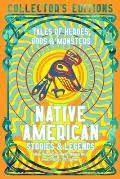
I picked up a book recently called “Tales of Heroes, Gods, and Monsters: Native American Stories and Legends” because I don’t feel my curriculum that I teach students has enough Native American stories in it for me to choose from. In this time in our country where pompous asses want to run out immigrants saying they are the only true Americans, Native Americans are really the first Americans, and I so appreciate and empathize with their journey, story and struggle.
Native Americans are deeply rooted in the oral tradition of story telling. I didn’t know how much until I read the introduction of this book by Dr. Angelo Baca (Dine’/Hopi). It’s interesting because lately I had gotten on Tik Tok watching as well debating atheists on even the possibility of God and one of their many claims is the Bible writers stories are different, and they didn’t write down them originally so they couldn’t possibly be true. It was all orally passed down. They will often use the telephone game as an example which if you tell a story and pass it along between persons by the time that story reaches the last person, it’s all screwed up. Thus, conclusion: it’s all a scam.
I’m going to share some text from this book and then I will make some comments about it.
“Oral traditions are perhaps the last bastion of authentic Native American and Indigenous Identity…in a world filled with social media, internet content, and competing real-world and fake news sources…With new sophisticated versions of A.I., humans are increasingly left out of the equation each succeeding day. But storytelling will always be a human endeavor….we can look to the past when the world was about our collective survival, knowledge and wisdom.”
I love this quote too, “Technology is more accessible than it has ever been but only requires a short attention span for quick bursts of storytelling.” He goes onto share the story of Roger Fernandes at an indigenous storytelling event in Rhode Island. He told the audience right away, “I won’t be using the microphone to tell these stories. I don’t want to put my spirit through a machine.” How adorable is that when you think of it. He wants to share his heart so completely that he doesn’t want even the idea of any technology involved. The intention set around this event was no technology and not even writing anything down. Participants could draw or create things to give to the storytellers at the end.
These are stories that spanned generations from people who were trained listeners. They didn’t have the attention spans we had. I also like how the author says not every storyteller tells the story the same way, with the same energy or expression. This is probably why our books in the New Testament are a bit different, there are two Genesis stories, there are books not included in the Bible because they are wild and fantastical that people were afraid to put them in.
If you read some of the Native stories, as I have, I took a course in Native American Literature, they can be rather clunky. Nevertheless, I like what Baka says here. These were meant to be face to face stories. Almost like a skits or plays (this is my own take on it). We lose the essence of it without the human contact which is vital to that tradition.
“How ironic it is that world’s largest and most popular religions also began as oral traditions! But since they were written down, systematized and bureaucratically contained into a managed hierarchy of power and influence many of the lessons and teachings in these were lost…” He goes onto to describe that instead they were made to fulfill the purpose of men and rather than restore lost relationships with one another and to the divine.
“Saying there is only one singular true religion is like saying there is only one a singular true version of an oral tradition above others.”
I like how Bacca talks about oral tradition being very fluid in the way it engages the world and the realities beyond this world reflected in the stories they tell. And that we as human are not always, at all time, at the pinnacle of being all knowing in our abilities or intellect, nor in nature. We have much to learn, he says and I agree, on how to co-exist with other beings, spirits, deities, and people. He asks a question here in a gentler way than I’m about to: when will humanity get past its ego trip and shift its arrogant perspective so that we may thrive together?
For myself, my spirituality and relating to my ancestors, is in a state of flux ever since I came out and then the other shift was around the time of Covid. Sometimes I think I understand where I am and other times I realize I am only marginally understanding as I run across a new puzzle. I do count myself blessed though. I have 2 saints on my mom’s side and dad side. I have had strong visitations of spirit out in nature, sometimes at church which I don’t necessarily subscribe to as much, throughout my life. I have had visitations from angels and just what I would call the Holy Spirit, I presume. Not even when I was looking for it or even when I felt particularly close to God and at other times I was. But most of it? Most of it, was out in nature. And that’s why I relate to the Native Americans so much because they too value Nature and see the divine it.
My organized “written” down faith, glosses over nature and most Christians are fine “paving” over paradise while they wait for another. But I hear our Genesis stories in another way. That we are stewards of this Earth. We were honored to give creation their names. Creation groans for its continual transformation and if we don’t praise God, our newer story goes, then the rocks themselves with praise in our place. The Book of Solomon pretty much uses nature as metaphors for some pretty heated scenes on the best romance novel in that collection. I mean who says God is anti-sex? There’s polygamy, homosexuality clearly between David and Saul. God created this in us, we just need to not abuse it or mistreat it.
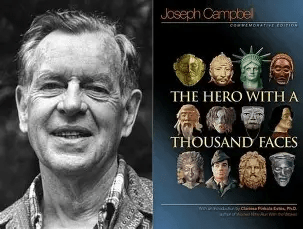
I can’t wait to dive in and choose some Native American stories for my students. What I never expected and then wanted to share with you is how engrained an oral tradition can be in a community. And they can be good listeners. Better listeners than we are today. It doesn’t mean that our ancestorial stories are for shit just because they are oral. They mean something. They may even more because they were better at listening than we are today. Kind of has me thinking of Joseph Campbell now too. He talks about the value of storytelling and the hero of 1,000 faces.

 Jamison's Writing Jams